

Workforce Risk Management & Frontline Authentication: A Complete Guide to BGV for Blue-Collar Hiring
Date Published
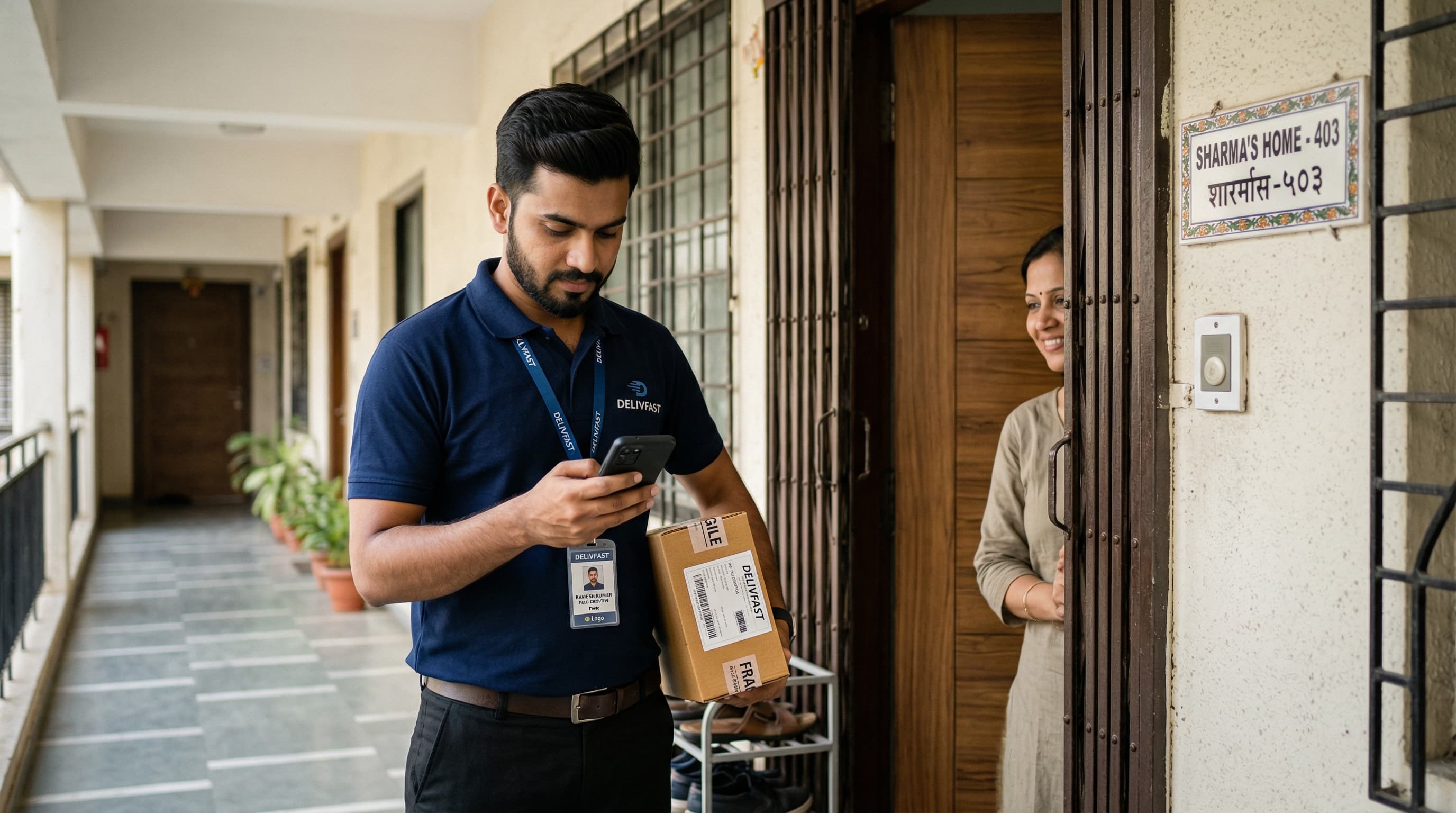
Hiring at the frontline is a scale game, but it’s also a trust game. Whether it’s a delivery executive entering a customer’s home, a technician handling on-site installations, or a warehouse worker managing high-value inventory, frontline employees operate at the closest point of interaction between your business and the real world. And that’s exactly where the risks are highest.
The challenge? Blue-collar hiring doesn’t always come with structured resumes, verifiable employment histories, or consistent documentation. Add to that high attrition, distributed operations, and rapid onboarding cycles, and traditional hiring checks start to fall short.
This is where workforce risk management and frontline authentication step in.
They shift the focus from just “filling roles” to building a verified, trustworthy workforce at scale. Through a combination of identity checks, address validation, criminal screening, and role-specific assessments, businesses can reduce fraud, improve safety, and protect their brand without slowing down hiring.
In this blog, we break down what workforce risk management really means, how frontline authentication works in practice, and what a comprehensive background verification (BGV) framework should include for blue-collar roles.
What is workforce risk management or frontline authentication?
Workforce risk management, especially in frontline or blue-collar environments, refers to the systems and processes used to ensure that every individual interacting with your business, assets, or customers is verified, trustworthy, and fit for the role. It goes beyond traditional hiring checks and focuses on mitigating real-world operational risks, ranging from theft and fraud to safety incidents and reputational damage.
Frontline authentication is a more execution-focused layer of this concept. It ensures that the person showing up for work is genuinely who they claim to be, with validated credentials, identity, and background. This becomes critical in sectors like logistics, home services, manufacturing, and security, where workers often operate in distributed, customer-facing environments.
Unlike white-collar hiring, where structured resumes and institutional records are common, frontline hiring often involves candidates with limited documentation and informal work histories.
In this context, workforce risk management is not just a compliance measure; it becomes a business-critical function that directly impacts safety, trust, and operational efficiency.
Why is it important to verify Blue Collar Workers in India
For FMCG brands, risk does not usually originate in boardrooms or central offices. It appears quietly, every day, in the field. It shows up when a sales representative visits a retailer, when a promoter handles inventory, or when a temporary worker executes a scheme without direct supervision.
As FMCG operations scale, brands increasingly depend on large, distributed field teams that include permanent staff, contractual workers, and third-party resources. This expansion brings speed and reach, but it also increases exposure. Yet many organisations still treat employee background verification as a one-time onboarding formality. Once completed, it rarely features in daily operations.
At the same time, frontline authentication is becoming essential. Field staff now perform actions that directly affect revenue, brand reputation, and compliance. Without reliable ID checks at the point of execution, brands are effectively operating on trust alone.
Challenges in the current process in Blue Collar Background Verification
Lack of Direct Control Over Employee Background Verification at the Enterprise Level
FMCG companies rely on employee background verification to ensure workforce integrity, yet often lack direct visibility into how ID checks are conducted and validated across their frontline staff. This creates an accountability gap where the enterprise bears risk without having verifiable, real-time assurance over identity authenticity.
Inability to Enforce Frontline Authentication During Field Execution
FMCG brands struggle to confirm whether the verified employee is the one actually present at stores, delivery points, or customer locations. Without real-time frontline authentication, enterprises cannot reliably enforce identity assurance at the moment of work.
Disconnection Between Employee Background Verification and High-Risk Field Transactions
Employee background verification is typically completed only during onboarding, while critical frontline activities occur continuously in the field. The absence of real-time ID checks during deliveries, collections, or merchandising breaks the link between verified identity and operational accountability.
Weak Auditability of ID Checks and Frontline Authentication Decisions
When disputes, losses, or compliance reviews arise, FMCG companies must demonstrate who was verified and authenticated at the time of execution. Fragmented employee background verification records and non-real-time frontline authentication prevent the creation of a defensible audit trail tied to ID checks.
What a Comprehensive BGV Process or Frontline Authentication Should Cover
A robust background verification (BGV) process for frontline workers is not one-size-fits-all. It must be modular, risk-based, and tailored to the role. For example, a delivery executive entering customers' homes requires more rigorous verification than a warehouse loader.
At its core, a comprehensive BGV framework should aim to do two things:
- Validate the authenticity of the candidate-provided information
- Uncover any undisclosed risks that could impact the organization
Given the scale and urgency of blue-collar hiring, modern BGV processes are increasingly tech-enabled, API-driven, and mobile-first, allowing companies to verify candidates quickly without compromising on depth or accuracy. Now, let’s deep dive into the step-by-step process of a comprehensive BGV check:
Identity Verification
Identity verification is the foundation of any frontline authentication system. Before assessing skills or experience, employers must establish that the individual exists within official records and is not impersonating someone else.
This typically involves validating government-issued IDs such as Aadhaar, voter ID, or a driving license. In high-risk scenarios, advanced checks like biometric validation or real-time photo matching may also be used to eliminate identity fraud. A strong identity check ensures that every subsequent verification layer, address, criminal history, and employment, maps accurately to the same individual.
Address Verification
Address verification plays a crucial role in establishing traceability and accountability. For many blue-collar workers, especially migrants or gig workers, residential stability may be low, making it harder to track individuals post-hiring. In distributed workforce models, this becomes essential for maintaining operational control and audit readiness.
Criminal Record Checks
Criminal background checks are a critical risk-filtering mechanism, particularly for roles involving customer interaction, access to assets, or sensitive environments. These checks typically include:
- Real Police
- eFIR database that
- Court record screenings
The goal is not just to identify past offenses, but to assess the relevance of any history to the role being hired for. For instance, a history of theft would be a major red flag for logistics or delivery roles.
Ultimately, this layer helps organizations proactively prevent incidents that could lead to financial loss, legal exposure, or reputational damage.
Drug and Health Screening
While not mandatory across all roles, drug and health screening can be a valuable addition for safety-critical job functions. Industries such as logistics, manufacturing, construction, and healthcare often require workers to:
- Operate heavy machinery
- Handle hazardous materials
- Interact with vulnerable individuals
In such cases, ensuring that employees are physically fit and not under the influence of substances is essential for maintaining workplace safety. Drug tests and basic health screenings can help:
- Reduce workplace accidents
- Improve productivity and reliability
- Ensure compliance
How IDfy Strengthens Field Workforce Risk Management in Real-Time
1. Elevating Employee Background Verification From Documentation to Decision Support
Technology-enabled platforms allow employee background verification to function as a living input into workforce decisions rather than a static onboarding record. By standardising ID checks and making verification signals accessible across systems, FMCG companies gain the ability to factor identity confidence into deployment, access, and escalation decisions.
2. Using Frontline Authentication to Reduce Reliance on Manual Oversight
Rather than increasing supervision headcount, FMCG leaders are using frontline authentication to create automated assurance at scale. Real-time ID checks embedded into routine workflows help verify presence and intent without disrupting field productivity or eroding workforce trust.
3. Applying ID Checks Selectively Based on Risk, Not Universally by Default
Mature FMCG risk programs do not authenticate everything equally. Technology platforms make it practical to apply employee background verification and frontline authentication dynamically, triggering ID checks only during higher-risk moments such as asset handovers, sensitive routes, or exception handling.
4. Converting Identity Signals Into Organisational Learning and Audit Readiness
Modern identity platforms generate structured data from employee background verification, frontline authentication, and ID checks that can be analysed over time. This enables FMCG organisations to identify risk patterns, refine controls, and maintain defensible audit trails without adding manual process overhead.
Conclusion
In FMCG, the field is where strategy meets reality. Brands that continue to rely on static employee background verification and manual ID checks leave themselves exposed to risks that are increasingly difficult to defend.
With platforms such as IDfy, real-time employee background verification, frontline authentication, and ID checks move from policy intent to operational reality. These controls are deployable at scale, integrate naturally into FMCG field workflows, and provide leaders with measurable assurance where it matters most.
To explore how this approach can be applied within your field operations, connect directly at shivani@idfy.com to take the conversation forward.
FAQs
- Is background verification mandatory for blue-collar workers?
While not always legally mandated across all sectors, it is increasingly considered a business necessity, especially for roles involving customer interaction, asset handling, or safety risks. - Is candidate consent required for BGV?
Yes. Employers must obtain explicit consent before conducting any background verification and ensure that the data is handled in compliance with privacy regulations. - Can BGV be customized based on job roles?
Absolutely. In fact, best practice is to design role-based verification workflows, applying deeper checks only where the risk justifies it.

E-commerce has shown resilience throughout the pandemic, however gig workforce onboarding continues to be a major challenge. Here's why.

The Background Verification process is incomplete without Court Record Checks. Here's why it cannot be overlooked!

Police Verification for a job is a mandatory check for employees to ensure safe hiring and a fraud-free workplace