
Chargeback Fraud Explained: Types, Causes, and How Businesses Can Prevent It
Date Published
In the modern digital economy, trust is the primary currency. For CXOs, maintaining a seamless customer experience while protecting the company's bottom line is a delicate balancing act. One of the most persistent threats to this balance is online payment fraud, specifically in the form of chargebacks.
While the chargeback system was created as a consumer protection tool, it has increasingly been leveraged by bad actors or misinformed customers, leading to what we call chargeback fraud. This doesn't just result in lost sales; it leads to lost inventory, high administrative fees, and potential penalties or even merchant account termination by payment processors. Understanding how to navigate this landscape is no longer just a "back-office" task; it is a core business strategy.
What is Chargeback Fraud?
Chargeback fraud, often includes friendly fraud (a major subset) or cyber-shoplifting, occurs when a consumer makes a legitimate online purchase but later disputes the charge with their bank instead of seeking a refund from the merchant. This allows the customer to keep the goods or services while the payment is reversed.
Imagine a customer buys a high-end laptop from your online store. They receive the product, they are happy with it, but then they call their bank and claim they never made the purchase or that the box arrived empty. The bank reverses the transaction, taking the money back from your account and returning it to the customer. The customer now has both the laptop and their money.
Chargeback fraud occurs when a consumer intentionally or sometimes mistakenly, misuses the chargeback mechanism, meant for legitimate disputes, to secure a refund for a purchase they actually made and intended to keep. It is often referred to as cyber-shoplifting.
Unlike a traditional refund, where the customer contacts the merchant to return the item, a chargeback bypasses the merchant entirely. The customer goes straight to the issuing bank, leaving the business to deal with the financial fallout.
Types of Chargeback Fraud
Not all fraudulent disputes look the same. To build an effective chargeback management strategy, you must recognize the three primary types of chargeback fraud:
- Friendly Fraud
This is perhaps the most common and frustrating type. Friendly fraud happens when a legitimate customer makes a purchase but then disputes it with their bank. This might be because:
- They didn't recognize the business name on their bank statement.
- A family member purchased it without their knowledge.
- They forgot they signed up for a subscription.
- They are trying to get something for free (intentional abuse).
- Card Not Present (CNP) Fraud
This typically involves stolen card details or compromised credentials. A criminal steals credit card information and uses it to make purchases online. Since the physical card isn't required (card-not-present fraud), it becomes difficult for merchants to verify identities without strong authentication tools. When the real cardholder notices the charge, they file a legitimate chargeback. While the cardholder is a victim, the merchant is the one who loses the money and the goods.
- Merchant Error
Technically not "fraud" by the customer, but it results in the same outcome. This happens when a merchant accidentally charges a customer twice, sends the wrong item, or fails to process a refund in a timely manner.
Common Causes of Chargeback Fraud
Understanding the why behind a dispute is the first step in stopping it. Industry studies suggest that the causes of chargebacks are shifting from traditional theft to behavioral and systemic triggers.
- Merchant Error & Double Dipping: Simple errors, like charging a customer twice for the same order or failing to cancel a subscription after a request, are major triggers. If a merchant's internal refund process takes more than 3-5 business days, customers often lose patience and go to their bank.
- The Convenience Gap: A staggering 84% of customers find filing a chargeback easier than requesting a refund from a merchant. This is driven by banking apps that allow "one-click disputes."
- Billing Descriptor Confusion: Confusing billing names (e.g., a parent company name instead of the storefront name). If a customer doesn't recognize the name on their statement, they assume it’s fraud.
- Family Fraud: Often categorized as friendly fraud, this occurs when a child or spouse uses a saved card without permission. This is particularly prevalent in gaming and digital services.
The Chargeback Dispute Process
The dispute process is no longer a simple "he-said, she-said." It is a highly regulated, time-sensitive cycle governed by card network rules (Visa/Mastercard).
- Inquiry/Retrieval Request: The bank asks for more information before filing a formal chargeback. Proactive merchants can resolve the issue here with a refund to avoid a fee.
- The Chargeback (First Presentment): The issuing bank pulls funds from your account. You are hit with a fee (typically $15–$100), and your "Chargeback Ratio" increases.
- Representment (The Counter-Attack): This is where you submit compelling evidence. In 2026, the bar for evidence is high. You must provide:
- IP address and device fingerprint.
- Proof of delivery with digital signatures or GPS coordinates.
- Logs of the customer accessing digital goods.
- Pre-Arbitration & Arbitration: If the bank rejects your evidence, you can escalate. However, the loser often pays an additional arbitration fee of $500+, making this uneconomical for low-ticket items.
Impact of Chargeback Fraud on Businesses
The financial damage is a "leaking bucket" that drains much more than just the sale amount.
- The 2-4x Cost Multiplier: Industry benchmarks from 2026 show that the true cost of a chargeback is now four times the original transaction amount. If a customer disputes a $100 purchase, the merchant can lose upto roughly $200 to $400 when accounting for lost goods, shipping, marketing acquisition costs, and processing fees.
- The 0.9% Danger Zone: Most payment processors monitor your chargeback-to-transaction ratio. Crossing the 0.9% to 1.0% threshold triggers monitoring programs with massive monthly fines. Exceeding this can lead to the total termination of your merchant account.
- False Declines: Out of fear of fraud, many businesses over-tighten their filters. This leads to an average 5.0% rejection rate for legitimate orders. For a $100M company, that is $5M in lost revenue due to fraud paranoia.
How to Prevent Chargeback Fraud: A 2026 Playbook
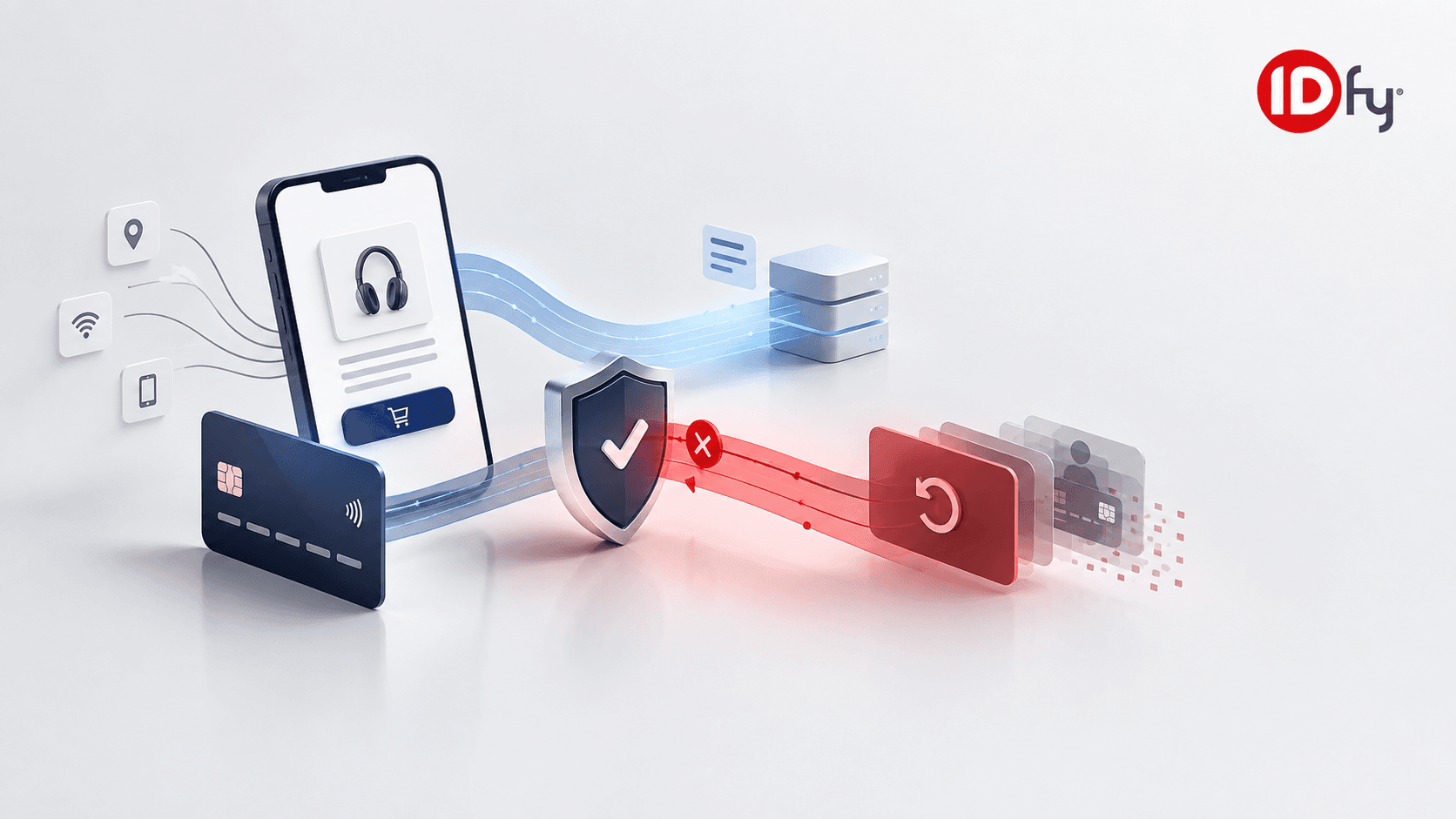
Chargeback fraud prevention must be automated because manual reviews cannot scale with 2026 transaction volumes.
- Pre-Transaction: The Shield
AI-Powered Risk Scoring: Use machine learning to analyze contextual signals (is the customer using a VPN? Is the shipping address 500 miles from the billing address?).
Biometric & SCA: Enforce Strong Customer Authentication (SCA) for high-risk profiles to shift the liability of fraud back to the bank. - Post-Transaction: The Intercept
Chargeback Alerts: These services notify you before a dispute becomes a formal chargeback, giving you a 24-hour window to issue a refund and save your chargeback ratio.
Visa RDR (Rapid Dispute Resolution): An automated system that follows your pre-set rules to instantly refund eligible disputes, preventing them from ever reaching your record. - Communication: The Soft Defense
Real-time Fulfillment Visibility: Proactive SMS/email alerts about shipping delays prevent "Item Not Received" claims.
Automated Evidence Collection: Capture 10+ data points (User ID, Email timestamp, Login logs) at the moment of purchase, so your representation is ready in seconds.
Emerging Trends in Chargeback Fraud (2026)
The "front line" of fraud is evolving rapidly due to AI and new payment rails.
- Agentic AI Fraud: Fraudsters now use AI Agents to conduct hyper-realistic phishing and automate the dispute process at a massive scale. These agents can impersonate customers and bypass traditional rules-based security.
- The Rise of Synthetic Identities: Criminals are combining real data (stolen government IDs or identity data) with fabricated data to create "Frankenstein" identities. Because these identities have good credit scores, they bypass initial fraud filters but are designed specifically for "bust-out" chargeback fraud.
- Social Media "Refund Hacks": Social media (TikTok/X) has seen a surge in content framing chargeback fraud as a hack to get free products. 47% of Gen Z consumers exposed to this content view it as a low-risk way to save money.
- BNPL & Low-Ticket Disputes: As Buy Now, Pay Later (BNPL) grows, so do "uneconomical disputes", small $20 charges that are too expensive for merchants to fight manually, leading to a "death by a thousand cuts."
Conclusion
For today’s CXO, how to prevent chargeback fraud is not just a technical challenge; it is a customer trust challenge. By implementing a sophisticated chargeback management strategy that combines AI monitoring, clear communication, and robust authentication, you can protect your revenue while maintaining a frictionless experience for your honest customers.
In an era where fraud evolves daily, your defense must be proactive, not reactive. At IDfy, we help businesses build the infrastructure of trust. From seamless identity verification to advanced fraud detection, we ensure that your growth isn't hindered by invisible costs.
Protect your revenue today. To learn more about building a fraud-resilient payment ecosystem, reach out to us at shivani@idfy.com.
Explore the 2026 payment fraud landscape in India. Learn the most common types of payment fraud, the emerging fraud trends, and how to build a future-ready fraud prevention strategy.
A deep dive into UPI fraud in India, explaining the mechanics behind Collect requests, QR code scams, mule accounts, and why authenticated fraud is so difficult to detect.