
Top 7 Data Discovery and Classification Tools for DPDPA Compliance in 2026
Date Published

Your organization has thousands of data points flowing in every single day, and they're not coming from one place. Website forms, social platforms, employee records, vendor systems, and customer support tools – each one is its own channel quietly feeding data into your CRMs and beyond.
Most teams assume this is under control. It usually isn't. Over time, that data doesn't just sit where it landed; it spreads. Across cloud storage, endpoints, CRMs, shared drive folders, and someone's inbox. Employees make duplicate copies without thinking twice and forward files, sharing access across teams that were never supposed to have it in the first place. This build-up of data over time can slowly lead to compliance problems if the data you’re receiving isn't monitored.
With the DPDP implementation window closing in on May 2027, you need to ensure that you have concrete answers to:
- What data do you have?
- How sensitive is your data?
- Who has access?
- Where is this data stored?
Getting answers to the above is possible only if you conduct a data discovery exercise coupled with data classification that will help you tag data based on the level of its sensitivity.
And in the context of DPDP compliance, you can't fake your way through this part. If a data principal revokes consent, you're expected to actually delete their data, but you can't run a deletion action on their data if you don't know where it exists. If someone files a grievance or an access request, the clock starts ticking the moment it lands, and "let us check where that might be" isn't an answer that holds up within the deadline.
This is exactly what a good data discovery and classification tool does. Below, we get into what these tools actually do and why they're the foundation on which everything else in a DPDPA programme rests. We've reviewed seven platforms based on their features, pros, cons, and where each one genuinely fits (and where it doesn't).
What Data Discovery and Classification Actually Means for DPDPA
Data discovery is the process of scanning your systems, both structured and unstructured, to find where personal and sensitive data is stored. Classification is the next step, which comprises tagging the data based on its sensitivity (Aadhaar, PAN, bank account number, health record, and biometric data) so you can actually apply the right controls to it.
Under the DPDP Act, this isn't optional groundwork you can skip. A data fiduciary can't fulfil obligations like purpose limitation, data minimisation, or storage limitation or send out breach notifications without first knowing what personal data they hold and where it lives. A solid data classification policy, paired with a tool that actually automates classification, turns this from a manual spreadsheet exercise (that goes stale the day it's finished) into something continuous and auditable.
Most modern platforms here fall under the umbrella of DSPM, which stands for Data Security Posture Management. Older data loss prevention software mostly watches data as it moves through email, USB drives, and endpoints. DSPM works differently: it's built to find and classify data at rest, wherever that rest happens to be.
What Actually Matters When You're Evaluating Data Discovery and Classification Tools
Before we get into the comparisons, here's what we think should be non-negotiable when you are evaluating a data discovery and classification tool for DPDP compliance:
- Coverage of structured and unstructured data across databases, warehouses, endpoint devices, connectors, and legacy file servers
- India-specific classifiers that reliably catch Aadhaar, PAN, voter ID, and other India-native identifiers. A tool built for GDPR patterns alone will miss a lot here
- Data classification accuracy that doesn't result in false positives. For example, choosing a Regex-based classification tool can lead to this problem
- Have actual remediation workflows, not just a dashboard that tells you where the problem is and leaves you to fix it manually
- A real data classification policy engine that lets your compliance team define sensitivity tiers that map to the DPDP Rules, 2025
- Integration with consent, DPAR, and breach management, so discovery feeds the rest of your privacy program instead of living on its own
With that in mind, here's how seven data discovery and classification platforms stack up.
1. Privy by IDfy
Privy by IDfy is India's leading privacy and data governance platform, purpose-built to help organisations meet the requirements of the Digital Personal Data Protection Act (DPDPA).
Its data governance module, Data Compass, was designed specifically for India's privacy landscape rather than adapted from a global privacy suite, enabling enterprises to discover, classify, catalogue, and continuously monitor personal data across structured, semi-structured, and unstructured data sources. From databases, CRMs, and cloud storage to Google Drive, FTP servers, and employee endpoints, Data Compass provides a unified view of where personal data resides and how it moves across the organisation.
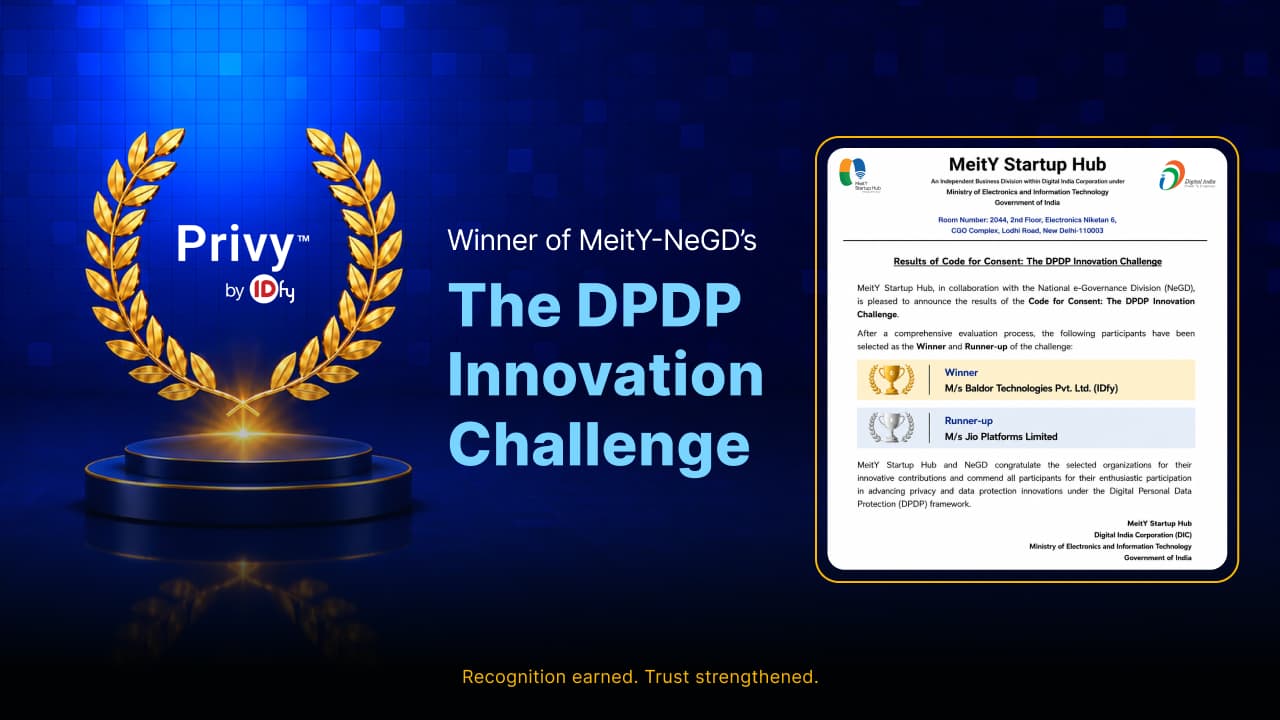
Further validating its capabilities, Privy was ranked #1 in the MeitY-NeGD DPDP Innovation Challenge, which showcases its strength in building technology that addresses India's evolving data protection requirements.
Key Features
- India-native classifiers covering current and legacy identifiers, including Aadhaar, PAN, and Voter ID, with detection of whether the underlying PII is masked or unmasked
- Discovery and classification across 50+ Indian PII types, backed by AI-powered data lineage and 200+ connectors
- Endpoint scanning, which is especially useful where field agents collect data locally before it's uploaded centrally
- Automated masking and deletion workflows that trigger straight from classification findings, run within the enterprise's own infrastructure
- Discovery findings flow directly into Privy's consent, DSR, DPIA, and breach management modules, all in the same platform
Pros
- Built for DPDPA specifically, not retrofitted from a global tool with an India module bolted on
- Classification engine actually trained on Indian identity documents, legacy and regional formats included, not just generic PII patterns
- Covers structured and unstructured data, including endpoint-level discovery, which most competitors don't bother with
- Discovery output plugs directly into consent, DSR, and breach workflows; no separate integration project required
- Data stays and gets remediated inside the enterprise's own infrastructure, which cuts down exposure during scanning
- Rides on IDfy's 14+ years in identity verification, and was recognised in MeitY's DPDP Innovation Challenge
Cons
- Smaller international partner and integration ecosystem compared to long-established global DSPM vendors
Best Fit
Privy makes the most sense for Indian enterprises, BFSI, insurance, retail, and healthcare that need discovery and classification built specifically for DPDPA, with India-specific classifiers and a direct line into the rest of their privacy program.
DPDP Consideration
Because Data Compass is designed around the DPDP Act and the 2025 Rules from the start, there's a lot less mapping and customization work needed to get discovery output aligned with India's classification, consent, and breach notification requirements.
What Makes Privy by IDfy Stand Out?
While many vendors position data discovery as a standalone capability, Privy’s Data Compass connects across all other modules, ensuring that compliance activities are driven by live data rather than static inventories or manual inputs. This interconnected architecture enables organisations to move beyond point-in-time compliance and build a continuously evolving privacy program that scales with their business.
Connecting Data Discovery Across Every Privacy Module
- Enable Data Principal Rights (DPAR): Data Compass maps discovered personal data to consent records and processing purposes, making it easier to locate all instances of an individual's data, identify consent mismatches in real time, and respond to access, correction, or erasure requests with greater speed and accuracy.
- Strengthen Third-Party Governance: By tracking how personal data moves between internal systems and external vendors, organisations gain clear visibility into third-party processing activities, helping identify compliance gaps, demonstrate accountability, and support vendor risk assessments.
- Automate Privacy Impact Assessments (DPIAs): When new repositories, high-risk processing activities, or sensitive personal data are discovered, Data Compass can automatically trigger Privacy Impact Assessments, ensuring privacy risks are evaluated proactively instead of relying on manual reviews.
- Accelerate Incident & Breach Response: During a security or privacy incident, Data Compass quickly identifies the affected data assets, impacted individuals, connected systems, and relevant databases, enabling faster investigations, more accurate breach assessments, and timely regulatory notifications.
By making discovery the foundation of every privacy workflow, Privy transforms Data Compass from a simple discovery engine into the operational backbone of an organisation's privacy program. Instead of managing disconnected tools for discovery, consent, assessments, data subject rights, and breach management, organisations benefit from a single, integrated platform where every privacy decision is informed by real-time data visibility. This unified approach reduces manual effort, improves audit readiness, and helps organisations build a sustainable, long-term privacy governance framework rather than treating compliance as a series of isolated activities.
2. Aurva
Aurva is a Bengaluru-based data security platform known for providing data visibility in real-time and not just via periodic scans.
Key Features
- Data classification using NLP and metadata correlation
- Database activity monitoring
- Data flow monitoring
- Access mapping that connects identities, roles, and service accounts to the data they can reach
Pros
- Supports runtime and identity-level monitoring, in addition to discovery and inventory.
- Extends monitoring beyond discovery to include runtime behaviour and identity interactions.
Cons
- Built as a data security and DSPM platform first, not a full DPDPA suite, so consent management, DPAR automation, and breach notification aren't native. You'll need to source those separately
- Leans toward engineering and security teams in setup and daily use, which can be friction for compliance or legal teams who usually own DPDPA programs
- Document-level and endpoint discovery gets less attention than database and cloud environments
- Newer to the compliance conversation specifically, with a shorter public track record there compared to older privacy vendors
- Classification centers on generic PII and financial data categories rather than being tuned to specific Indian identifiers like Aadhaar or PAN directly
Best Fit
Aurva works for cloud-native, engineering-led organizations, fintech and digital banking, especially, and those that want real-time database monitoring and data flow visibility alongside classification.
DPDP Consideration: It can help meet the data security safeguard requirements under the DPDP Act, but you'll almost certainly need to pair it with a dedicated consent and DPAR platform to cover the full compliance lifecycle.
3. GoTrust
GoTrust bills itself as an end-to-end privacy compliance automation platform, with data discovery sitting as one module inside a larger consent, DPAR, and DPO Copilot suite.
Key Features
- A discovery engine that scans structured and unstructured sources of data to support DPDPA, GDPR, and PDPL compliance
- AI-powered classification that sorts personal data by sensitivity
- Workflow integrations with ITSM and SOAR tools like ServiceNow and Jira
Pros
- Discovery comes bundled with consent management and DPAR automation, all in one modular platform
- Clear DPDPA alignment sitting alongside global framework coverage, handy if you also have cross-border obligations
Cons
- Not much is publicly available on classification accuracy, false-positive handling, or endpoint scanning depth
- Little evidence of India-specific document classifiers
- A newer platform overall, with less enterprise deployment history than the more established DPDPA vendors
- Remediation leans on ITSM/SOAR integrations, which means extra setup work for teams not already on ServiceNow or Jira
Best Fit
GoTrust suits mid-market and growing Indian companies who want discovery bundled with consent and DPAR automation in one platform, rather than teams hunting for a specialized, standalone discovery engine.
DPDP Consideration
The discovery module is explicitly mapped to DPDPA, but if you're sitting on a large, messy unstructured data estate, it's worth validating classification accuracy and endpoint coverage in a proof of concept before you commit.
4. Leegality (ConsentIn)
Leegality has been around a while as a document infrastructure company, known for eSignatures and digital stamping, used by over 2,000 Indian businesses, with more than 120 million customer consents and eSignatures digitised so far. Its ConsentIn platform extends that document-first history into DPDP compliance, data discovery included.
Key Features
- Automated detection and classification of data categories such as Aadhaar number, name, and date of birth
- Consent lifecycle governance bundled together with data discovery and mapping, cookie compliance, and data impact assessment
- Consent lifecycle governance, data discovery and mapping, cookie compliance, data impact assessment, and audit-ready policy workflows, all under one roof
- Standardized, sector-specific consent notice templates for healthcare, finance, and similar industries
- API integrations across websites, apps, and enterprise systems
Pros
- Backed by proven document infrastructure and eSignature experience
- Discovery is tightly woven into consent and document workflows
Cons
- Data discovery is a relatively recent addition to what has historically been an eSignature and document infrastructure business, not a data security one
- Not much is known about its capabilities on database scanning, cloud coverage, or classification accuracy
- Reads as one feature inside the broader ConsentIn suite rather than a deep, purpose-built discovery engine
- No clear evidence of endpoint-level or cross-cloud scanning on par with platforms built primarily for data security
- Best fit is fairly narrow: organizations already using, or seriously considering, Leegality's document infrastructure. It's a harder sell for teams purely shopping for a discovery and classification engine
Best Fit
ConsentIn can be considered by BFSI organizations in particular, already on or evaluating Leegality's document and eSignature stack, who want consent governance and basic data discovery in the same place.
DPDP Consideration
It's clearly built around DPDP requirements and works well for consent-linked data mapping, but if you're managing a large, spread-out structured and unstructured data estate, it's worth checking the depth of its discovery engine against dedicated DSPM tools before treating it as your primary discovery layer.
5. Redacto
Redacto is an Indian privacy-tech company that recently raised funding to build out its AI-driven privacy infrastructure.
Key Features
- Discovery and classification of sensitive data across the organization
- Continuous discovery and classification that learns data patterns and flags new sensitive data types as they show up
Pros
- Discovery, consent, vendor risk, and reporting all live in one platform
- Built around DPDPA workflows, with continuous data discovery
Cons
- No widely available independent benchmarks yet on classification accuracy or false-positive rates
- Discovery is one part of a four-module suite, which likely means less specialized depth than a tool built to do discovery and nothing else
- Limited detail on how well it handles structured databases and cloud warehouses next to specialized DSPM vendors
Best Fit
Redacto can work for small to mid-sized Indian organizations, BFSI and healthcare especially, wanting an integrated, budget-conscious suite that covers discovery, consent, and vendor risk without juggling multiple point solutions.
DPDP Consideration
Does have capabilities to meet DPDPA obligations, but given how early-stage the company is, larger enterprises would be smart to pilot it against their real data volumes before making it the backbone of a large-scale program.
6. Atlan
Atlan is a global data catalog and governance platform, positioned as a "context layer" for enterprise data and AI. Classification for compliance purposes largely comes through its partner integrations.
Key Features
- A unified data catalog spanning databases, warehouses, files, and BI tools, with metadata search and lineage tracking
- Native integrations with dedicated DSPM and privacy tools such as Cyera, Immuta, and BigID that pull PII, PHI, financial, and credential classification signals into its context layer
- AI-assisted tagging, lineage propagation, and policy-context surfacing for both human users and AI agents
- Governance workflows covering data stewardship, certification, and glossary management
Pros
- Can connect with existing security, privacy, and governance ecosystems.
- Designed to work alongside other enterprise security and compliance tools.
Cons
- Atlan doesn't do deep, standalone sensitive-data classification itself. By its own product documentation, it's built to pull in classification signals from tools like Cyera rather than generate them independently, so you'll typically still need a separate DSPM or privacy tool underneath it
- Designed as a general-purpose catalog and governance platform for data and analytics teams, not something built with DPDPA or India in mind
- No India-native identifier classifiers (Aadhaar, PAN, Voter ID) baked into the core product
- Enterprise-grade pricing and implementation effort, generally aimed at large, data-mature organizations rather than compliance-first buyers
- No consent management, DSR automation, or breach notification workflows, which are all required pieces of DPDPA compliance
- Its usefulness for privacy purposes really depends on you already having, or budgeting for, a separate classification tool alongside it
Best Fit
Atlan fits large, data-mature organizations already running (or planning) a broader data governance and AI-readiness program, wanting privacy classification signals from tools like Cyera or BigID surfaced inside one unified catalog.
DPDP Consideration
On its own, Atlan isn't a DPDPA compliance tool. If you're considering it for that purpose, budget for a dedicated PII discovery and classification engine underneath it, plus separate consent and DSR tooling, since Atlan's job is to organize that context, not create it.
7. Varonis
Varonis is a data security platform known for unstructured data environments like file shares, email, and legacy on-premises systems, and used widely across large enterprises and government.
Key Features
- Classification engine blending deterministic pattern matching, metadata analysis, and AI for ambiguous or novel data types across structured, semi-structured, and unstructured data
- Access graph mapping entitlements, group memberships, sharing links, and permissions around sensitive data
- Continuous activity monitoring and behavior baselining to catch abnormal access patterns
- Integration with Microsoft Purview for label application and DLP enforcement
Pros
- Supports data classification across structured and unstructured enterprise data sources.
- Designed for deployment across enterprise environments with diverse data repositories.
Cons
- Built as a global enterprise data security platform, not something designed for DPDPA, so there are no India-native classifiers for Aadhaar or PAN out of the box
- No native consent management, DPDPA automation, or DPDPA-specific breach notification, meaning you'll still need a separate compliance layer for Indian regulatory obligations
- Enterprise pricing and deployment complexity that can feel heavy for mid-sized Indian organizations racing toward DPDPA deadlines
- Some rules-based elements of its classification can still throw up noisy alerts requiring manual triage, according to independent DSPM comparisons
- No dedicated India go-to-market or DPDPA-specific packaging, so implementation partners generally have to do the work of mapping its output to Indian regulatory categories themselves
Best Fit
Varonis suits large, often multinational enterprises with substantial on-premises or hybrid file environments that need deep unstructured-data classification and access-risk analytics, and that already have, or are building, a separate DPDPA compliance layer on top.
DPDP Consideration
Indian enterprises evaluating it should plan for extra work mapping its classification taxonomy to India-specific identifiers and DPDP Rules categories, and pairing it with dedicated consent, DPAR, and breach notification tools.
DSPM vs DLP: Which One Do You Actually Need for DPDPA?
This trips people up a lot, so it's worth untangling. DLP tools exist to stop data from leaving an organization, watching email, endpoints, and file transfers for policy violations. DSPM takes a different angle: it's data-first, discovering and classifying sensitive data at rest, wherever it happens to be sitting, including systems nobody remembers still exist.
For DPDPA specifically, discovery and classification have to come first. You genuinely can't write a workable data loss prevention policy, or a meaningful data classification policy, for data you haven't found and labeled yet. Most organizations building a serious DPDPA program end up running both eventually: DSPM for continuous discovery and classification, DLP for enforcement at the point data tries to leave.
How to Actually Choose the Right Tool
There's no universal "best" data discovery and classification tool here, only the one that fits your data footprint and regulatory exposure. Some questions worth sitting with during evaluation:
- Does the classification engine genuinely understand Indian identity documents, or is it running generic global patterns with a DPDPA label slapped on?
- Can it discover both structured data (databases, warehouses) and unstructured data (documents, emails, chat logs, scanned files)?
- Does discovery connect directly into your consent management, DSR, and breach notification workflows, or does it sit off to the side, needing a separate vendor to stitch it together?
- How is your data actually processed during scanning? Tools that keep everything inside your own infrastructure reduce exposure risk right at the scanning stage.
- Is there a real data classification policy framework mapped to the DPDP Rules, 2025, or is it a generic risk-scoring model borrowed wholesale from GDPR?
- How mature is the vendor, really? A shorter track record might still be fine for a smaller pilot, but if your DPDPA deadline is close, that's a risk worth weighing carefully.
Why Privy is A Suitable Choice As A Data Discovery Tool
Privy is a compelling choice for data discovery and classification under the Digital Personal Data Protection Act (DPDPA) because it is built with Indian regulatory requirements in mind rather than adapted from a global data security platform.
Its Data Compass continuously discovers, classifies, and monitors personal data across cloud environments, on-premise infrastructure, SaaS applications, databases, endpoints, file shares, and unstructured repositories, giving organizations an always-updated view of where personal data resides.
Unlike many international tools that require significant customization, Privy's AI-powered classification engine is trained to identify more than 150 Indian personal data formats, including Aadhaar, PAN, Voter ID, passports, driving licences, GST-related information, and other sensitive identifiers commonly processed by Indian businesses. This broad visibility helps organizations uncover shadow data, reduce blind spots, and establish a reliable inventory of personal information across the enterprise.
Beyond discovery, Privy helps organizations understand how personal data is used and protected throughout its lifecycle. It enriches discovered assets with metadata, ownership details, and business context while mapping data flows, monitoring sensitive data movement, identifying policy violations, and supporting continuous Data Security Posture Management (DSPM). Its endpoint scanning capabilities extend visibility to employee devices, helping detect sensitive files that often escape traditional governance programs. Combined with seamless integration into existing security ecosystems, flexible cloud and on-premise deployment options, and over 14+ years of IDfy's experience serving India's most regulated industries, Privy offers enterprises a practical, scalable foundation for achieving and maintaining long-term DPDPA compliance rather than treating data discovery as a one-time exercise.
Conclusion
Every DPDPA program starts in the same place: knowing where your PII data actually lives. Whether that's a purpose-built India-first platform like Privy, a runtime-focused engine like Aurva, a bundled suite like GoTrust, Leegality, or Redacto, or a global catalog and security platform like Atlan or Varonis, the discovery and classification layer isn't optional infrastructure you can defer. It's the foundation everything else, consent, data subject rights, breach response, gets built on top of.
For Indian enterprises, it usually comes down to one real question: does the tool actually understand Indian data, in Indian formats, the way the DPDP Act expects it to be classified? And does discovery connect straight into the rest of your compliance workflow, or are you left stitching tools together yourself? That's the gap Privy's Data Compass was built to close.
Want to see how Data Compass discovers and classifies PII across your systems? Reach out to us at shivani@idfy.com to get a clear map of your data before your DPDPA obligations catch up with you.
FAQs on Data Discovery and Classification Tools
1. What is the difference between data discovery and data classification?
Data discovery locates where personal and sensitive data exists across your systems. Data classification is the step after, tagging that data by type and sensitivity so you can apply the right controls to it.
2. Is data discovery mandatory under the DPDP Act?
The Act doesn't name a specific tool as mandatory, but obligations like purpose limitation, data minimization, and breach notification are, practically speaking, impossible to meet without first knowing what personal data you hold and where.
3. What is DSPM and how is it different from DLP?
DSPM discovers and classifies sensitive data at rest across your systems. DLP monitors and blocks sensitive data as it moves, through email or endpoints, for instance. Most mature privacy programs end up running both.
4. Can a data discovery tool classify both structured and unstructured data?
It should, in theory. Structured data in databases and warehouses, unstructured data in documents, emails, chat logs, scanned files. In practice, coverage depth varies a lot by vendor, so this is worth testing in a proof of concept rather than taking on faith.
5. Why do India-specific classifiers matter for DPDPA compliance?
Global tools are often built to catch GDPR or CCPA-style identifiers and can miss India-specific formats like Aadhaar, PAN, or Voter ID, especially legacy or regional-language documents. That gap shows up as real classification errors.
6. How often should discovery and classification scans run?
Given how fast new data gets created and moved around, this should run continuously or on a frequent automated schedule, not as a once-a-year audit exercise.
7. Does a data discovery tool replace the need for a consent management platform?
No. Discovery and classification tell you what personal data you have and where it lives. Consent management governs how you're allowed to collect and use it. They work best together, whether that's native in one platform or through a solid integration.
8. What should a data classification policy actually include?
Sensitivity tiers (public, internal, confidential, restricted, or whatever variant you use), a mapping of each tier to specific data types like Aadhaar or health records, and clear handling and retention rules for each tier under the DPDP Rules, 2025.
9. Are data labeling tools the same as data classification tools?
Closely related, not identical. Labeling usually means tagging individual data elements; classification applies broader sensitivity categories, often using those labels as an input.
10. Should Indian enterprises go with a global DSPM vendor or an India-native platform? Depends on scope. Multinationals already running global privacy programs might prefer extending an existing global DSPM tool. If DPDPA is your primary obligation, an India-native platform with built-in local classifiers and direct consent, DSR, and breach workflow integration usually saves you time.
11. How much does a data discovery and classification tool cost?
It varies a lot, based on data volume, number of connected systems, and whether it's bundled into a broader privacy or DSPM suite. The best approach is requesting a demo and a scoped quote based on your actual data environment, rather than trusting a published price list.

Here’s a quick summary of the DPDP rules released by MeitY, giving insights into how the world of data fiduciaries and consent management platforms will look.
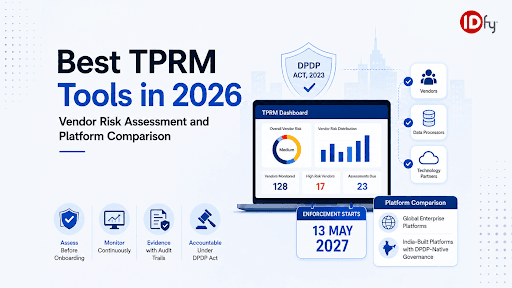
Compare the best TPRM tools for DPDP compliance in India. See pros, cons, vendor risk features, and why Privy by IDfy stands out.